Dilworth Mountain · Hillside & benchland properties
Drip & Low-Volume Irrigation for Dilworth Mountain Properties
On dry, sloped or rock-mulched ground, overhead spray loses much of its water to evaporation and runoff before it reaches a root. Drip does not.
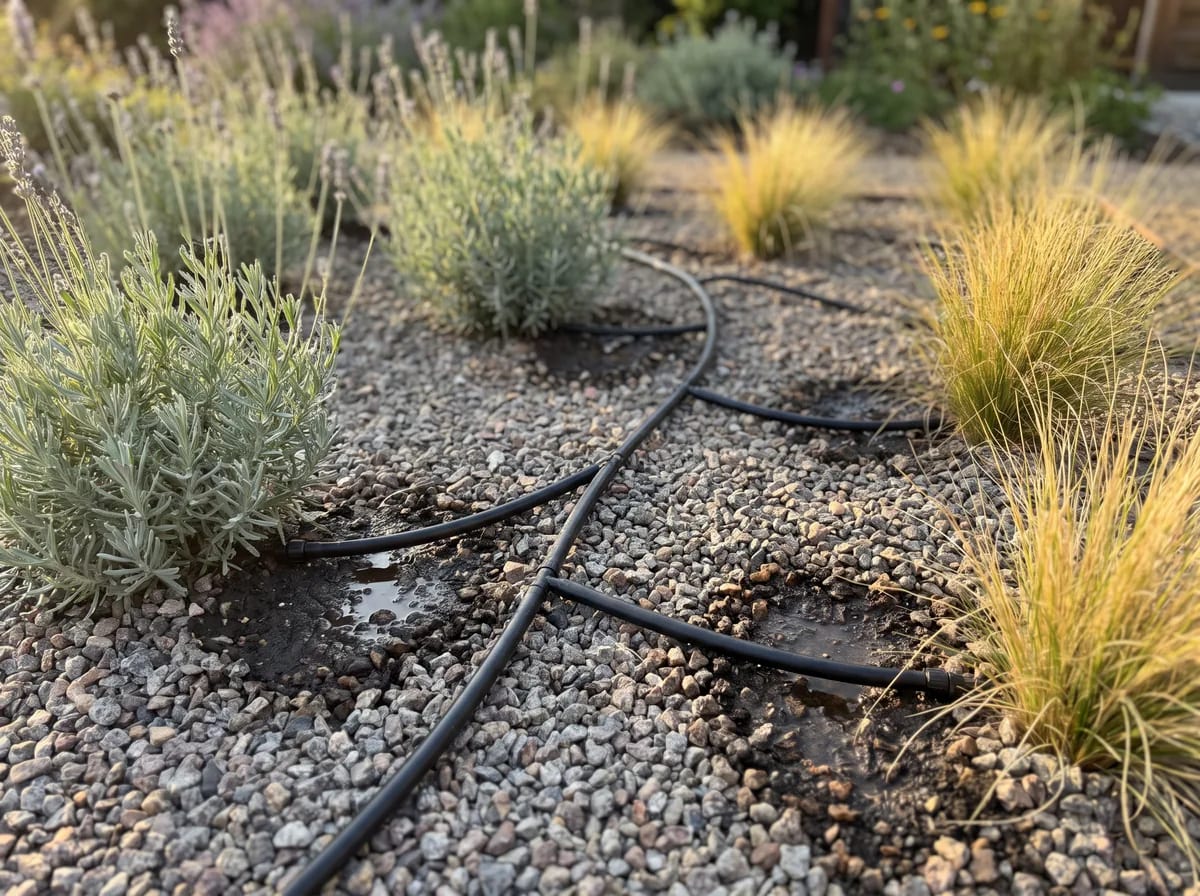
Hillside properties are where drip earns its keep most clearly. Thin soil over rock holds very little water, steep grades shed anything applied quickly, and rock mulch drives surface evaporation up — three problems that low-volume root-zone delivery addresses simultaneously.
Commonly requested here
Drip irrigation work on Dilworth Mountain properties
- Converting terraced and rock-mulched beds from spray to drip
- Emitters sized individually for established trees and shrubs
- Short frequent cycles suited to shallow soil over bedrock
- Pressure regulation across drip zones spanning elevation
- Dedicated drip zones separated from turf schedules
Worth knowing
Where soil over bedrock is shallow, run frequency matters more than duration. A long cycle simply drains past the root zone, so short frequent applications keep the small available soil volume in range.
Issues that come up in Dilworth Mountain
- Thin soil over rock giving very little water-holding capacity
- Low-head drainage draining a whole zone out the lowest head after every cycle
- Water sheeting off terraced beds before it can soak in
Local context
- Elevation change within one Dilworth Mountain property is often enough to shift zone pressure noticeably between the highest and lowest head.
- Rock outcrop and shallow soil are common across the hill, which limits how much water the ground can hold at any one time.
- Terraced retaining-wall landscaping is widespread and generally suits drip or low-volume emitters better than overhead spray.
Exposed hillside position means more wind and stronger sun than the valley floor, and shallow soil over rock that dries out quickly after watering stops.
What to expect
Typically part of the job
- Dedicated drip zones separated from turf schedules
- Pressure regulation across drip zones spanning elevation
- Short frequent cycles suited to shallow soil over bedrock
- Assessment of which areas suit drip conversion
- Flush point installation for seasonal maintenance
- Controller programming for drip run times and frequency
Scope varies between contractors. Use this as a baseline when comparing quotes, and ask what is included before agreeing to work.
Questions
Drip irrigation in Dilworth Mountain
Can existing spray zones be converted to drip?
Usually yes, and it is a common upgrade. Conversion typically keeps the existing valve and buried lateral, adding a pressure regulator and filter at the zone and running drip line through the bed from there. The important part is that converted zones need their own schedule — drip runs longer and less often than spray — so they should not stay grouped with turf on the same programme.
Water drains out of my lowest sprinkler head after every cycle. Is that a leak?
It is a recognised condition called low-head drainage, and while it is not a burst pipe it does waste water and can leave a persistently soggy spot at the bottom of the slope. When a zone shuts off, water still in the lateral pipe runs downhill and exits the lowest head. Check-valve heads or in-line check valves at the low end resolve it.
Is drip irrigation better for my terraced beds?
On terraced, rock-mulched beds it usually is, for two reasons. Drip applies water slowly enough that the soil can absorb it instead of shedding it downslope, and it delivers to the root zone rather than losing volume to wind and evaporation on an exposed hillside. Converting beds to drip while leaving turf on spray is the most common upgrade pattern here.
Why do some heads on my Dilworth zone mist while others barely turn?
That is the signature of unregulated pressure across elevation. Water pressure drops roughly one psi for every 2.3 feet of rise, so on a terraced lot the highest head on a zone can be operating well below the pressure the lowest head sees. Heads with built-in pressure regulation, or a regulated valve, even this out so every head operates in its designed range.
Free, no obligation
Get hillside irrigation quotes for Dilworth Mountain
Tell us what your property needs. We pass the details to an independent irrigation contractor serving your area, and they contact you directly.
Prefer email?
Send the details to quotes@kelownairrigation.ca and we route it to the right contractor.
Email quotes@kelownairrigation.caNearby areas
Drip irrigation in neighbouring communities.
- GlenmoreA broad valley running north from downtown, flat through the centre with slopes rising on both sides.
- Springfield / SpallFlat central Kelowna land close to the city's commercial core.
- Drip irrigation in WildenSteep, rocky hillside north of Glenmore where development deliberately retains natural landscape and outcrop.
- RutlandPredominantly flat to gently sloping valley floor with deep, workable soil.
Related services
Often requested alongside drip irrigation.
- Irrigation InstallationDesign and installation of new in-ground irrigation systems, zone expansions and full replacements.
- Sprinkler RepairDiagnosis and repair of broken heads, leaking valves, wiring faults and zones that will not run.
- Spring Start-UpRecommissioning your system after winter — pressurising safely, testing every zone and setting the season's schedule.
Free quote requests
Get hillside irrigation quotes for Dilworth Mountain
Tell us what the job involves and we will pass it to an independent irrigation contractor working in your area. Free to request, and you are under no obligation to go ahead.