The Kelowna Irrigation Cost Guide: What You Pay For, Service by Service
A plain-language breakdown of what actually drives cost across the six main irrigation services in Kelowna — from a spring start-up to a full new install.
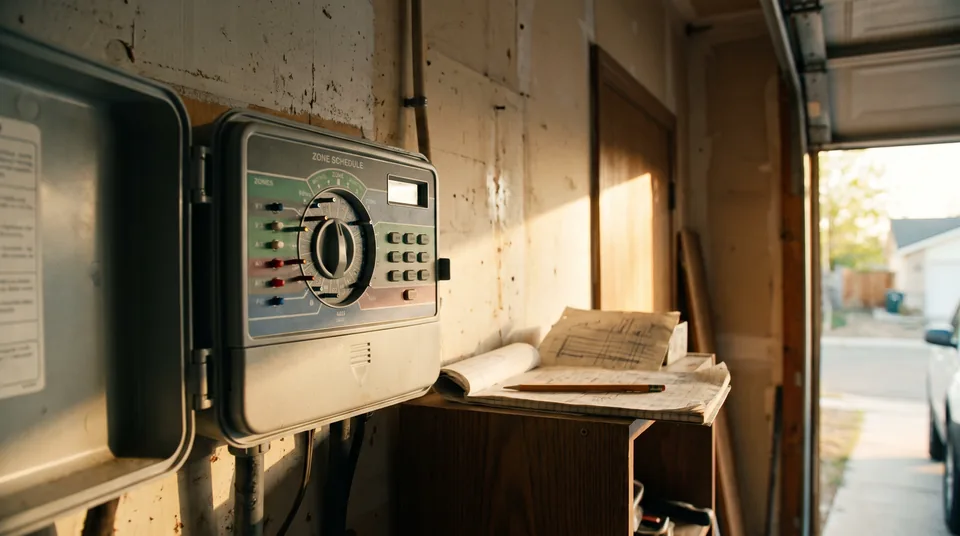
There is no single Kelowna irrigation cost. What you actually pay depends on which service you need, how much of it and a handful of property-specific variables that quotes tend to hide until the site visit. This is a plain-language breakdown of the six services this platform arranges quotes for, and what drives the range on each one.
Spring start-up
A start-up visit is short, technical and usually predictable. The tech opens the main slowly, walks each zone while it runs, checks every head for coverage and settling, tests for weeping valves and inspects the backflow assembly for freeze damage. On a straightforward six-zone residential system in Lower Mission or Rutland it is a defined-scope visit. On an acreage with a pump, pressure tank, filtration and thirty zones it is not — start-up on an acreage often takes most of a working day.
What actually varies the cost: zone count, whether there is a pump to prime, filtration to service, and whether anything is broken. Damage found at start-up gets quoted separately, which is fair — the visit itself does not include repair labour.
Sprinkler repair
Repair is the hardest service to quote in advance, because until someone actually looks it is guesswork whether a symptom is a broken head, a weeping valve, a wire fault or a cracked lateral under the lawn. Diagnosis is the valuable part; the physical repair is usually straightforward once the cause is known. Owners who describe symptoms carefully — which zone, when it started, what changes preceded it, whether it worked last year — help contractors price the visit closer to what it actually is.
Cost drivers here are the ratio of diagnosis to parts-swap, whether pipe is involved, and how deep the fault sits. A stuck valve is minutes. A cracked lateral under a fifteen-year-old rock garden is not. The dry-patches piece covers the diagnostic thinking that most often turns a suspected repair into a much cheaper adjustment.
One thing worth knowing: emergency mid-season repair, on a hot week in July when every contractor is booked, prices differently from a routine repair caught at spring start-up. Systems inspected properly in April rarely produce the July surprise, which is why the small cost of a thorough start-up visit tends to pay for itself over a season.
Winterization blowout
The blowout itself is a well-defined service — isolate the supply, connect a compressor sized to the system, work through zones one at a time until each runs dry, drain above-ground assemblies. What varies is size and access. A twelve-zone hillside system with a pump and a difficult isolation valve is different from a four-zone flat lot. Elevation adds urgency more than cost: on Black Mountain, Big White, upper Glenrosa or Joe Rich the window is shorter, and last-minute bookings are less available.
This one is covered in detail in the piece on when to blow out sprinklers in the Okanagan. The short version: book earlier than feels necessary, especially at elevation.
One under-appreciated cost driver on winterization is compressor sizing. A compressor sized for running tools cannot clear a residential system properly; a contractor with the right equipment gets the job done at low pressure and low risk, while an underpowered rig has to compensate with pressure that damages heads and seals. The invoice tends to look similar; the outcome does not.
Irrigation installation
This is the service with the widest genuine range, because a new install prices from the property up. Zone count is the biggest single driver — every zone needs a valve, a wire run and its share of the manifold, and zone count comes from what you have (turf, beds, shade, sun, slope, front, back) rather than from what you want to spend.
Beyond zone count, the variables that move installation cost are: whether the supply is municipal or pumped, the flow rate at the source, the presence and severity of slope, backflow assembly type, the tier of controller and heads, trenching conditions (mature lawn is slow, mature planting is slower, boring under a driveway is slower still), and mainline distance on large lots. On an Ellison acreage the pipe run can dominate the material cost before a single head goes in the ground.
The right way to think about installation quotes is the way this platform is built for: request two or three of them, and compare what each contractor caught about your property, not just the number.
Backflow testing
Testing is a service call with a certification requirement, and the visit itself is inexpensive and short. The cost equation opens up if the test fails — a rebuild kit, labour and a mandatory retest are the meaningful line items. Certified testers hold a BC Cross-Connection Control Tester ticket; reports from non-certified testers do not close out your purveyor's annual requirement, so cheap 'tests' from unticketed hands are not tests at all in the sense that matters. Backflow cost specifics are covered in detail in the backflow testing cost piece.
Drip irrigation conversion
Converting overhead spray to drip on garden beds is one of the highest-return upgrades available on Central Okanagan properties. The physical work — capping heads, running poly line, placing emitters, adding a filter and pressure regulator — is not expensive compared with pipe work. The saving on water and the improvement in bed health, on almost any property with rock mulch, hillside exposure or narrow beds where overhead spray misses, tends to be substantial.
What actually varies drip conversion cost: how many separate zones need conversion, whether filtration and pressure regulation already exist for those zones, and how much line has to be run. A one-zone bed conversion in Lower Mission is a short job. Converting all the beds and terraces on a Wilden hillside is a much bigger scope. This is a service where a written scope with an itemised list is worth requesting.
The single biggest cost-control decision
Match the service to the actual problem. Owners who ask for a new system when the existing one needs a controller upgrade and a spring tune-up pay for a replacement they did not need. Owners who ask for a repair when the underlying issue is a hillside without pressure regulation pay to break the same thing again next season. The site visit is usually free with the quote. Use it.
Timing matters more than most owners realise
Contractor availability tracks the season closely. Spring start-up bookings fill through March and April; winterization bookings fill through September and October. Installations booked in the shoulder seasons — late fall for a spring build, or early spring for a summer completion — tend to be quoted more competitively than mid-season rush work. If you have any flexibility on when the job happens, that flexibility is worth stating in the quote request. Contractors who can slot a job into a quieter week generally price it accordingly.
Maintenance arrangements as cost averaging
The alternative to piecing service together one visit at a time is a seasonal arrangement — spring start-up, backflow test, mid-season check, fall winterization on a defined cadence with one contractor. On a mid-sized property that averages out to a predictable annual figure and eliminates the emergency-call surcharge that a broken zone in July otherwise carries. Not every owner wants that structure, but it is worth pricing alongside one-off service if you plan to keep the property for years.
How to think about ranges rather than numbers
This site does not publish flat prices, because posting a number as if it were universal would mislead every reader whose property differs from the imagined one — which is all of them. The variables above are real, they add up differently on every property, and the only responsible way to give you a real number is to have a local contractor look at yours.
What actually helps you get comparable quotes
- A description of the property with approximate landscaped square footage
- How the water is supplied (municipal, well, licensed surface source)
- Whether you have an existing system, and if so, its rough age
- Any known pain points — dry patches, weeping valves, controller issues
- Whether you want a defined repair scope or a broader tune-up
Contractors receiving requests with that information can price closer to reality than ones handed only a postcode. It also lets you compare quotes on the same basis, which is the entire point. The piece on what questions to ask on an irrigation quote goes further on the return-side questions worth asking too.
One last note on the number
The related services below link to the specific pages for each one, with the plain-language technical framing that goes with them. Use those pages to sanity-check what a quote is describing, and use the quote request form to compare two or three local contractors on the same job. That is the answer to what irrigation costs here — a small stack of real quotes on your specific property, read carefully.