A Spring Irrigation Start-Up Checklist for Okanagan Properties
How to bring a system back online without breaking it — the slow-charge rule, what to check zone by zone, and when elevation means waiting longer.
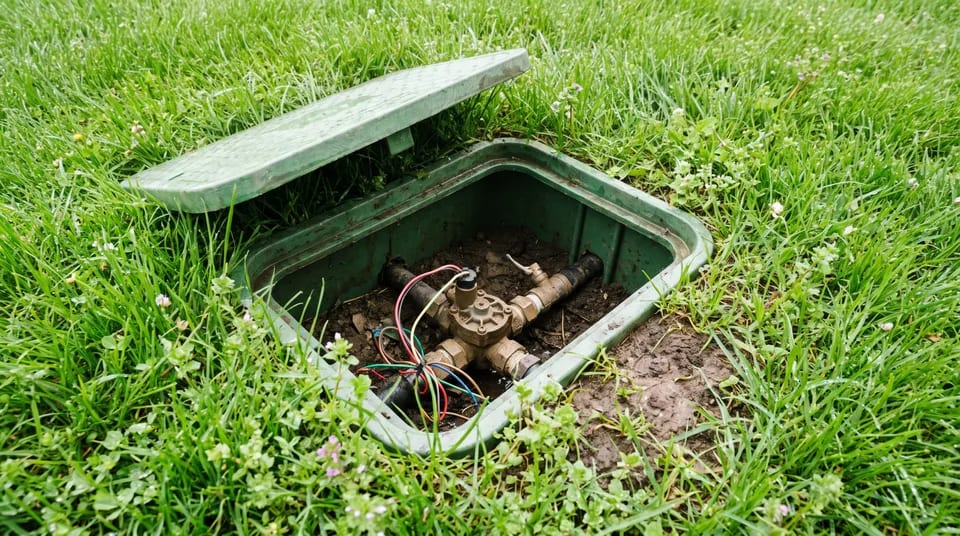
Most winter damage to irrigation systems is discovered at spring start-up. Some of it is also caused at spring start-up, by charging a system too quickly. Both facts point the same direction: this is a job to do slowly and in order.
Wait for genuine thaw
In the Central Okanagan valley, start-up usually lands somewhere in April, once the risk of hard overnight frost has passed and the ground has actually thawed. Pressurising while buried pipe is still frozen risks cracking it. At elevation the wait is considerably longer — at Big White, snowpack can persist well after valley properties are watering, and being patient there is far cheaper than being early.
The slow-charge rule
Open the main valve only partway and let the system fill gradually. A fast surge into cold, empty pipe is what turns a hairline winter crack into a break. This single habit prevents most start-up damage.
Then work through it zone by zone
- 1Run each zone individually and watch it from start to finish — do not run the whole programme.
- 2Check that every head rises, rotates and retracts as it should.
- 3Look for pooling, soft ground or water surfacing where it should not.
- 4Note any zone where pressure looks low across all heads, which points at a valve or supply issue rather than a head.
- 5Confirm nothing keeps running after the zone shuts off — a weeping valve wastes water continuously.
- 6Check the backflow assembly for freeze damage and any discharge from the relief opening.
Reset the schedule for spring, not August
Controllers hold whatever programme they were left on, which is usually a peak-summer schedule from last year. Spring plants need considerably less water than midsummer ones, and running an August programme in April wastes water and encourages shallow rooting. While you are at it, replace the controller's backup battery — a dead battery over winter is the usual reason a programme vanishes.
If something is wrong, stop
If a zone will not hold pressure or water is surfacing, shut the system down rather than running it to see what happens. A small crack under pressure becomes a bigger one. Finding damage in April, when contractors can still schedule you before the peak, is a much better outcome than discovering it in July.